
A psalm of ancient Israel, prayed by Jews and Christians alike
Psalm 23
Where it comes from
Psalm 23 comes from the Book of Psalms, the songs and prayers of ancient Israel. Its heading names David, who the Bible says was out keeping the sheep when the prophet Samuel came looking for Israel’s next king. Some scholars think it was written later; either way, it is a shepherd’s psalm. Jewish families sing it at the third meal of the Sabbath, and in the twentieth century it became the psalm of English-speaking funerals.
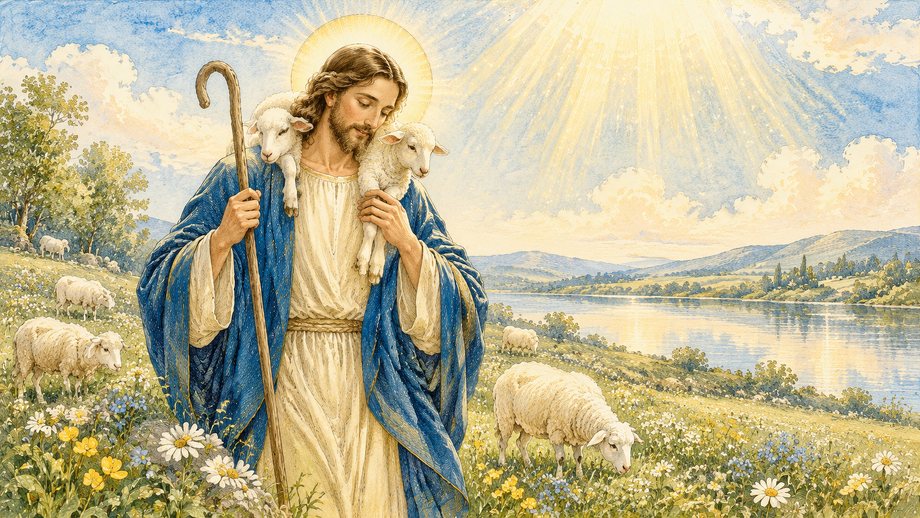
Read it closely and you’ll notice a turn in the middle. For three verses the psalm talks about God: he maketh, he leadeth, he restoreth. Then, at the valley of the shadow of death, it stops talking about him and starts talking to him: “for thou art with me.” The darker the road gets, the closer the words come.
The ending changes the picture again. The shepherd becomes a host who sets a table, fills the cup, and makes room in his house for good. When it says “goodness and mercy shall follow me,” it is a picture of being pursued by kindness.
Psalm 23
The LORD is my shepherd; I shall not want. He maketh me to lie down in green pastures: he leadeth me beside the still waters. He restoreth my soul: he leadeth me in the paths of righteousness for his name’s sake.
Yea, though I walk through the valley of the shadow of death, I will fear no evil: for thou art with me; thy rod and thy staff they comfort me.
Thou preparest a table before me in the presence of mine enemies: thou anointest my head with oil; my cup runneth over. Surely goodness and mercy shall follow me all the days of my life: and I will dwell in the house of the LORD for ever.
Psalm 23, King James Version
How people pray it
This psalm belongs in hospital rooms and at gravesides, and just as much on an ordinary Tuesday when nothing is wrong except that you’re tired. It is short enough to learn, and once you have it, it stays.
Try one verse a day for six days. Read it in the morning and carry that one line with you. On the seventh day, pray the whole psalm and see how different it sounds.
If you can’t sleep, keep it simpler still. Breathe in, and on the breath out say, “The LORD is my shepherd.” Breathe in again, and say, “I shall not want.” Keep going until you drift off. Nobody is counting.
More classic prayers
- Made by Catholic, Orthodox, Lutheran and Anglican Christians, and many more The Sign of the Cross
- Prayed by Christians of every tradition The Lord’s Prayer Matthew 6:9-13
- A Catholic prayer, loved well beyond the Catholic Church The Hail Mary
- Said by Catholic, Orthodox, Anglican and Lutheran Christians, and many more The Glory Be